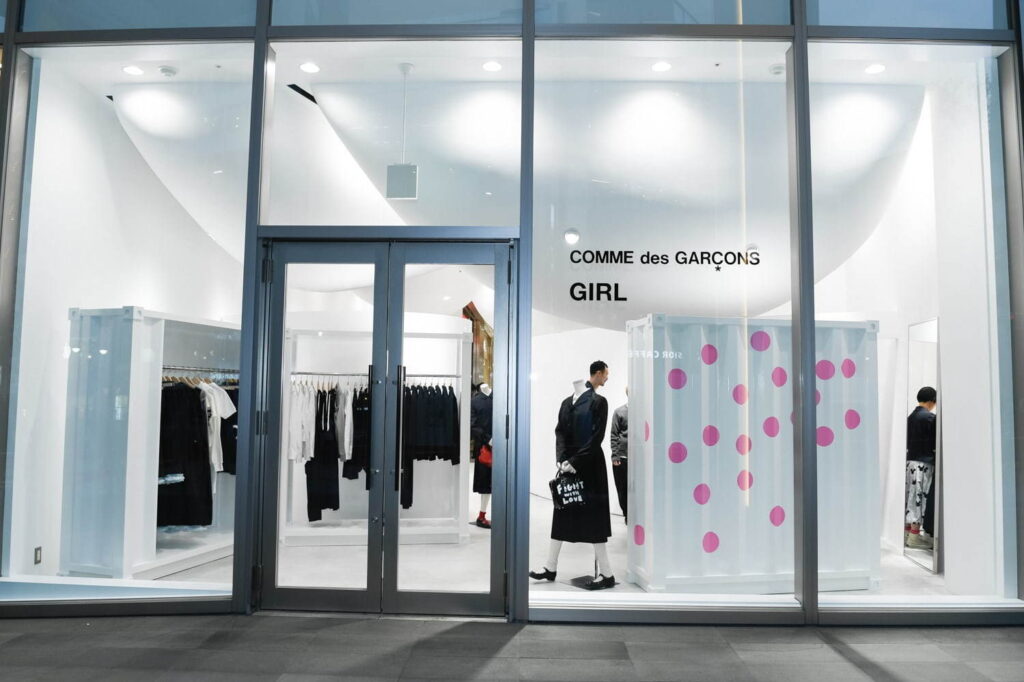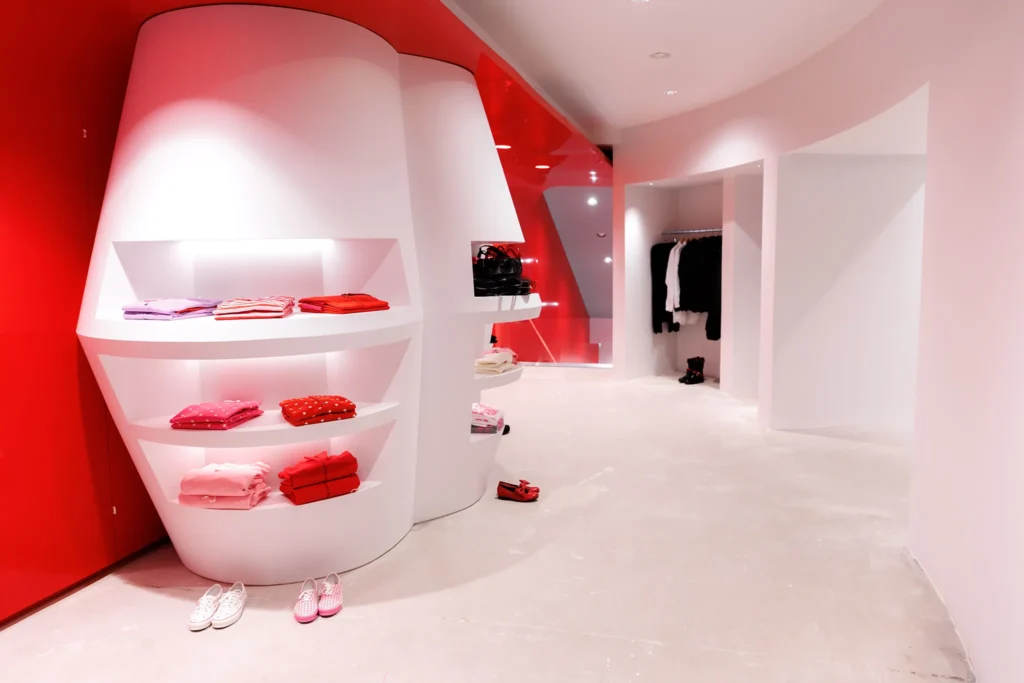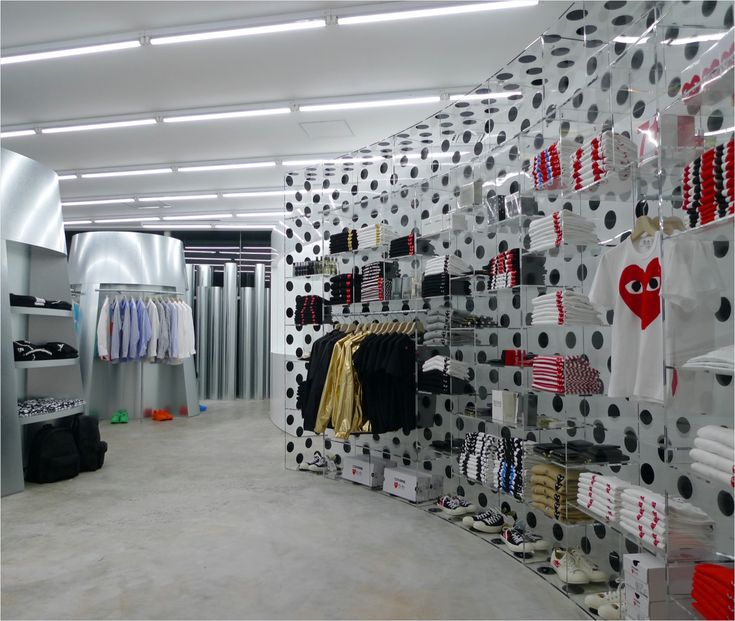
In a world of polished luxury, Comme des Garcons arrived in London to prove that beauty could exist in chaos.
🖋️ 1. The Philosophy That Redefined Fashion
Few brands in the modern era have challenged the boundaries of fashion as profoundly as Comme des Garcons.
Founded by Rei Kawakubo in Tokyo in 1969, the brand began not as a business, but as a radical idea: that imperfection could be more interesting than perfection.
Kawakubo’s approach was intellectual, emotional, and often confrontational.
Her early collections — with their unfinished hems, asymmetrical cuts, and silhouettes that ignored gender conventions — didn’t just reject fashion norms. They rewrote them.
When her work first appeared in Paris in the early 1980s, the Western fashion world was stunned.
Critics struggled to describe what they were seeing. Was it art? Anti-fashion? Or something entirely new?
The answer, Kawakubo insisted, was simpler: It was truth.
🖤 2. Why London Was Always the Right Home
If there’s one city that understands rebellion dressed in elegance, it’s London.
Its fashion DNA is built on contradiction — aristocratic yet anarchic, intellectual yet irreverent.
For Rei Kawakubo, London wasn’t just a market opportunity.
It was a creative mirror — a place where her philosophy could breathe.
In London, eccentricity is not a flaw; it’s an identity.
By the early 2000s, the global retail landscape was shifting. Luxury was becoming predictable, sterile.
What the city needed was not another boutique, but a cultural ecosystem.
That ecosystem arrived in 2004, when Comme des Garcons launched a space that would forever alter the conversation between commerce and creativity:
Dover Street Market.
🏛️ 3. Dover Street Market: The Revolution in Retail
At first glance, Dover Street Market London appeared to defy every principle of luxury retail.
There were no polished marble floors or pristine window displays.
Instead, visitors found a raw industrial interior — concrete, wood, and steel — filled with installations that looked more like art than merchandising.
Each brand within DSM was given freedom to build its own “world.”
From Gucci and Rick Owens to NikeLab and Simone Rocha, each designer became part of a curated dialogue, not a competition.
The result was revolutionary:
A store that felt alive — unpredictable, emotional, and deeply human.
Kawakubo described the concept as “beautiful chaos.”
A space where disorder becomes design, and imperfection becomes identity.
🌍 4. London’s New Creative Axis
Comme des Garcons in the UK quickly evolved beyond retail.
Dover Street Market became a cultural hub — part gallery, part laboratory, part performance.
Designers, artists, and students treated it as a destination to think, not just to shop.
Every visit felt new — because twice a year, the entire store was dismantled and rebuilt in a ritual called “New Beginning.”
This act of renewal became DSM’s heartbeat.
It wasn’t about reinvention for profit, but for philosophy — a reminder that creation can only exist through change.
In a market driven by trends, DSM stood apart by refusing to chase them.
It didn’t follow the season — it defined it.
🪶 5. The Dialogue Between East and West
Comme des Garcons in the UK represents a fascinating cultural dialogue between Japanese conceptualism and British experimentalism.
Japan gave Kawakubo the discipline and introspection that shaped her work; London gave her the freedom to let it explode.
The two forces — minimalism and rebellion — found perfect harmony inside DSM’s concrete walls.
The result is a global design language that’s neither Western nor Eastern — it’s human.
This cultural hybridization also reshaped how British designers think.
Figures like Simone Rocha, Craig Green, and Grace Wales Bonner cite Kawakubo as a guiding influence — not for her aesthetics, but for her attitude.
She gave them permission to challenge, to question, to make beauty from tension.
🧩 6. Collaboration as an Art Form
Long before “collaboration” became a marketing buzzword, Dover Street Market treated it as an art form.
Within its walls, unlikely partnerships flourished:
Thom Browne beside Supreme, Gucci beside Converse, Vetements beside Comme des Garcons Play.
The juxtapositions felt radical at first — but under DSM’s philosophy, they made perfect sense.
Each collaboration wasn’t about hype; it was about exchange.
The store became a physical manifestation of Kawakubo’s creative worldview:
That contrast, not conformity, is what drives culture forward.
❤️ 7. Comme des Garcons Play: Simplicity with Soul
While Dover Street Market operates as an avant-garde ecosystem, Comme des Garcons Play offers accessibility within the brand’s philosophy.
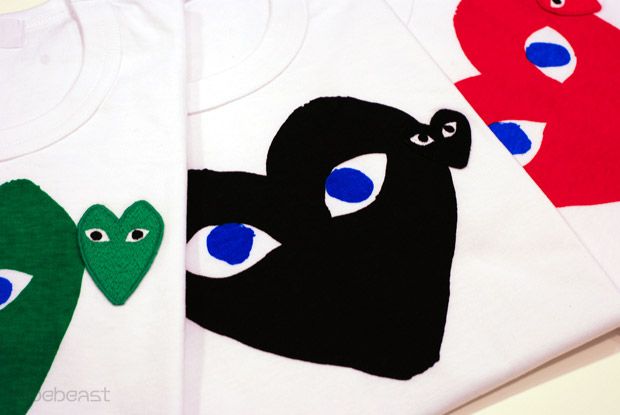
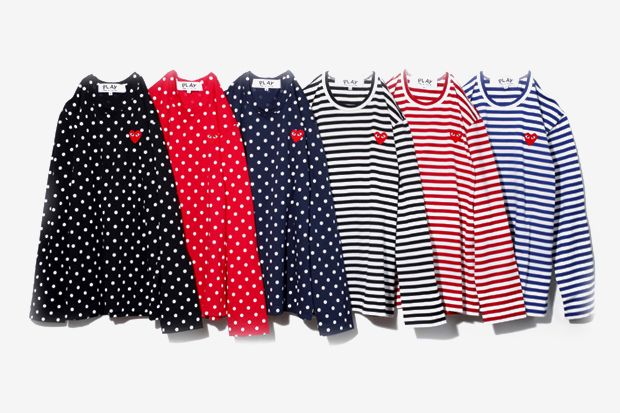
Its minimalist tees, striped designs, and iconic red heart logo — drawn by Polish artist Filip Pagowski — represent a softer side of the Comme des Garcons universe.
Play democratized the label’s ethos without diluting its integrity.
Through DSM, Play found a home that balanced concept and commerce — a symbol that you could be playful and intellectual all at once.
🌸 8. The Expansion: From Dover Street to the World
The London experiment worked so powerfully that it inspired a global evolution.
Tokyo, New York, Beijing, Los Angeles, and Singapore each gained their own Dover Street Market — each one distinct, yet connected by Kawakubo’s vision.
In 2016, the London flagship relocated to a new home in Haymarket, inside a restored Edwardian building.
The new space was larger, more ambitious, and even more unpredictable — but it carried the same DNA of imperfection and invention.
London remained the creative nucleus.
The birthplace of what retail could become when it’s allowed to think.
🔮 9. The Legacy of Comme des Garcons in the UK
Two decades later, the impact of Comme des Garcons in the UK extends far beyond fashion.
It reshaped how brands communicate, how stores function, and how consumers experience creativity.
It turned shopping into a form of storytelling.
Through Dover Street Market, Rei Kawakubo and Adrian Joffe built a new kind of cultural institution — one that thrives not on selling, but on inspiring.
“We create because we must,” Kawakubo once said.
And in London, that necessity became a movement.
🕯️ 10. The Future: Imperfection as Permanence
In an industry addicted to novelty, Comme des Garcons in the UK continues to stand quietly apart.
Its power lies not in chasing the future, but in shaping it through authenticity.
It reminds us that creativity doesn’t need polish, and that true luxury isn’t in the product — it’s in the thought behind it.
London remains its perfect partner: restless, diverse, and alive.
Together, they’ve proven that disruption can be elegant,
and that sometimes the most radical thing fashion can do —
is simply to tell the truth.